Showing posts with label eggs. Show all posts

Friday, November 11, 2011

Itlog na Maalat (Salted Eggs)


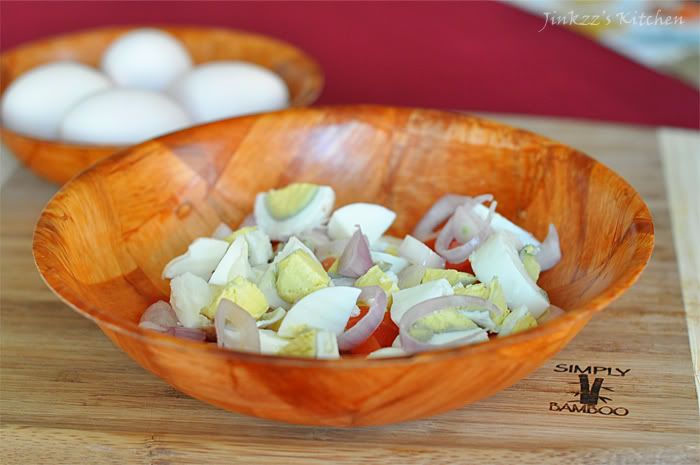
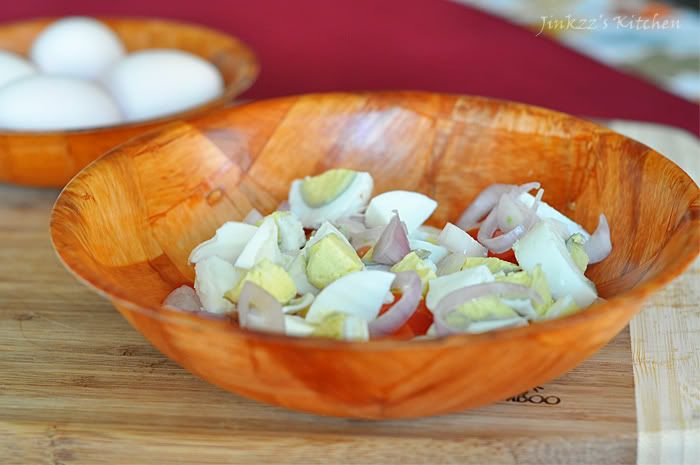
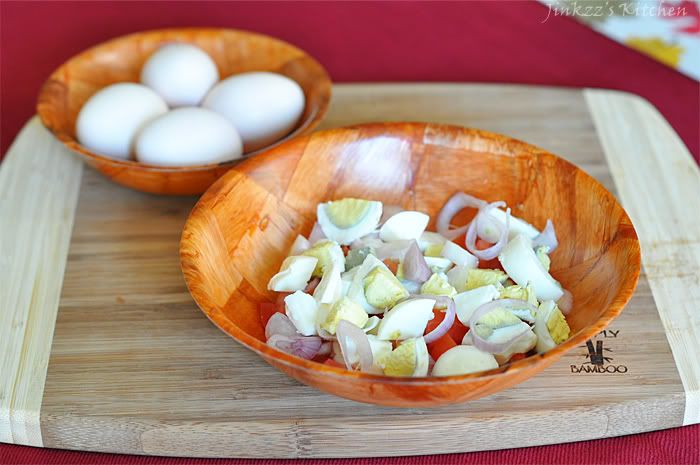
In a typical Filipino breakfast, you can also find a meat dish (tocino, chorizo, tapa, or hotdog) as well as fish or dried fish to go with the rice. Accompaniments include papaya relish (atchara) and/or sliced tomato. The other typical component of a Filipino breakfast is eggs which can be scrambled, fried, or boiled. Aside from these three, salted eggs or itlog na maalat is also very popular. I like mine sliced and combined with sliced tomatoes and shallots with a little vinegar...delish.

Salted eggs are actually easy to make. You just need eggs, water, and salt. Soak the eggs in the brine solution for a few weeks and then hard-boiled. Viola! salted eggs. Duck eggs are typically used for this recipe but you can use chicken eggs instead. These salted eggs are actually readily available at the Asian markets but I like to make my own. why? just because...hehehe. I kept mine in the corner of the cupboard where it is dark for about 4 weeks before I boiled them. Hard-boiled salted eggs can be kept in the refrigerator.
Salted eggs recipe:

1 dozen extra large chicken eggs
1 1/2 cups sea salt
4 cups water

1. Inspect eggs to make sure that none of them have any cracks.
2. In a non-reactive container, mix sea salt and water. Stir to dissolve.
3. Place eggs carefully making sure that they do not crack. Also ensure that they are submerged in the brine mixture.
4. Cover the container and store in a cool, dark spot for 4 weeks.
5. When ready, hard boil them. Cool and store in the refrigerator.
Combine all ingredients in a bowl and serve with rice and meat or fish


Salted Eggs with Tomatoes and Shallots.

2-3 hard-boiled salted eggs, chopped or sliced coarsely
2 medium sized Roma tomato, diced
2 small shallots, sliced into rings
1 Tbsp vinegar
Friday, October 14, 2011

Garlic Fried Rice (Sinangag sa Bawang)


Ingredients:
Rice is a staple in the Filipino diet so it is no surprise that we have a lot of rice dishes which range from plain old steamed rice to sweet as well as savory dishes. In the Philippines, most people eat rice three times a day (breakfast, lunch, and dinner). If you go to any household around meal time, the possibility of seeing rice at the dinner table is very high. To a Filipino, a meal without rice isn't really a meal but rather a snack...that is how much we love rice :) There is a running joke about spotting a Filipino in a dimsum place. Just look for someone who eats dimsum with steamed rice...hehehe.


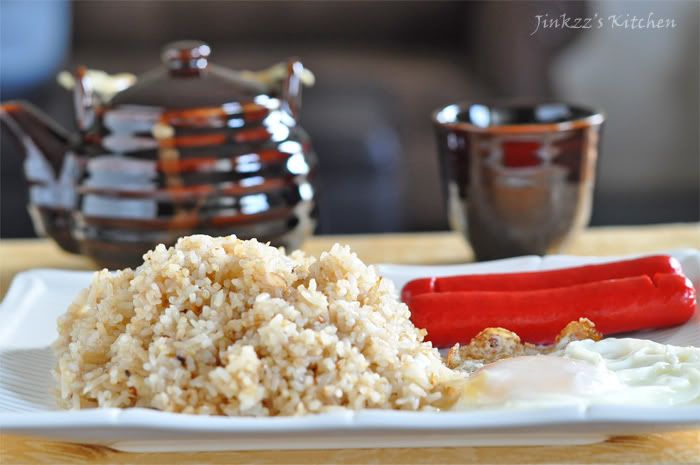
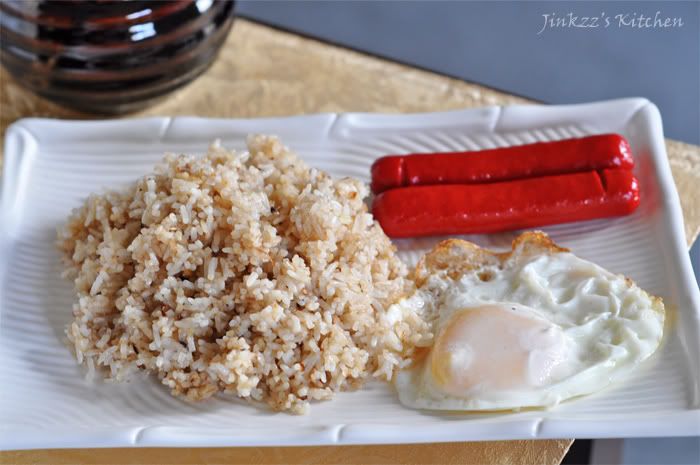
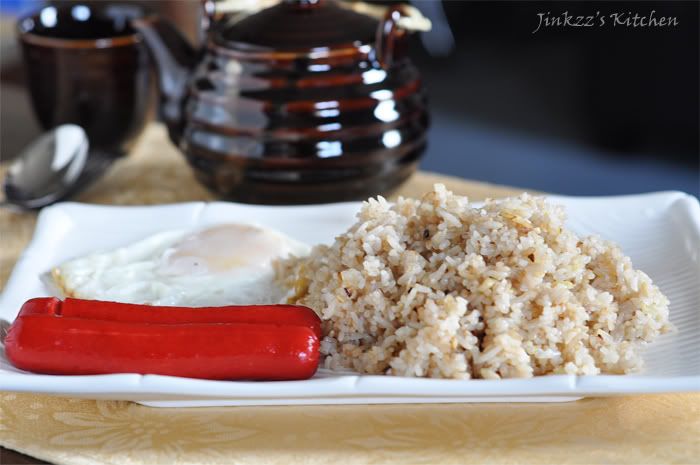
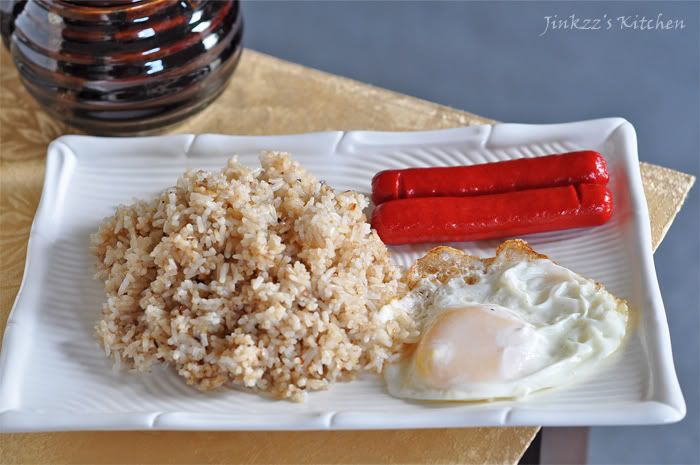
Aside from steamed rice, another favorite rice dish is fried rice. This is a staple in almost all of the restaurants - from the neighborhood turo-turo (hole in the wall resto) to the fanciest digs - in the Philippines. There are so many variation to this simple dish but the most common is garlic fried rice. The reason is probably because it is cheap as it only involves a few ingredients but taste so good. Although it is served on all three main meals, it is famously associated with breakfast as part of several traditional breakfast combination such as longsilog (long for longganisa = Philippine sausage; si for sinangag= fried rice; log for itlog = eggs), tapsilog (tap for tapa = cured beef slices), and tuyosilog (tuyo = dried fish)to name a few. The garlic rice that I made was served as a breakfast combo hotsilog which uses Philippine style hotdog, garlic fried rice, and sunny side up egg. Hotdog is cooked according to direction and eggs are lightly fried. Together they taste really yummy and delicious. For a more authentic Filipino breakfast, you can serve this combo with a combination of sliced onions, tomatoes, and salted eggs splashed with a little vinegar.


1 tbsp cooking oil for sauteeing
3-4 cups of day old cooked rice
1 - 2 shallot, finely minced
4 cloves garlic, finely minced
1 tsp soy sauce
sea salt, to taste

1. Heat pan over medium heat. Add oil and let it heat up a little bit
2. Add garlic and shallot. Cook until fragrant and translucent.
3. Add rice and mix with garlic/shallot mixture. Saute for about 2 minutes.
4. Add soy sauce and mix well.
5. Season with salt according to taste
7. Continue to cook for another 4-5 minutes then remove from heat and transfer to a serving dish. Serve warm.

Sunday, October 2, 2011

Chinese Tea Eggs


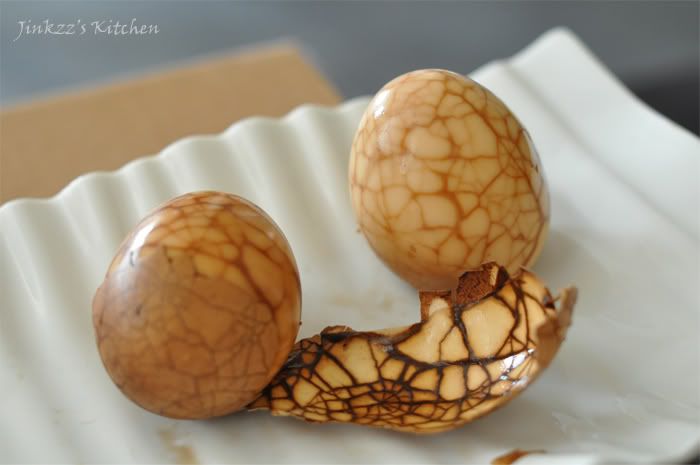
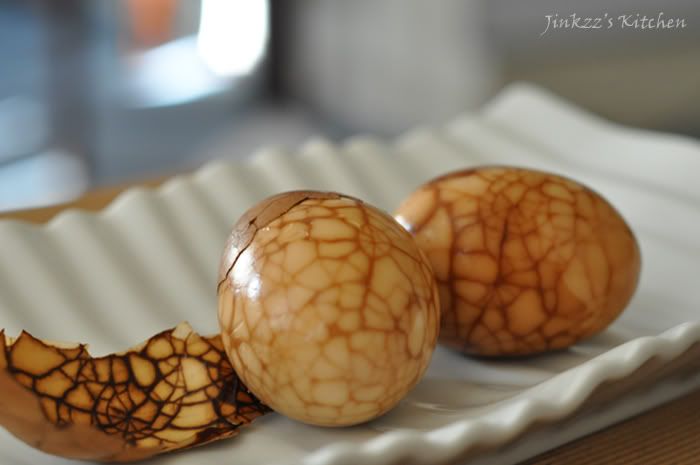
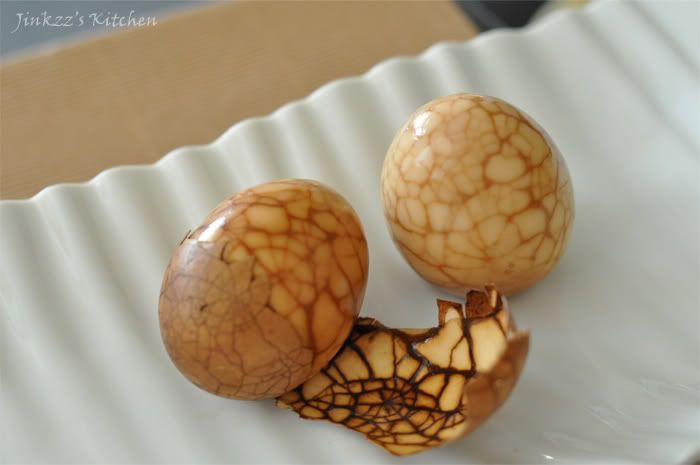
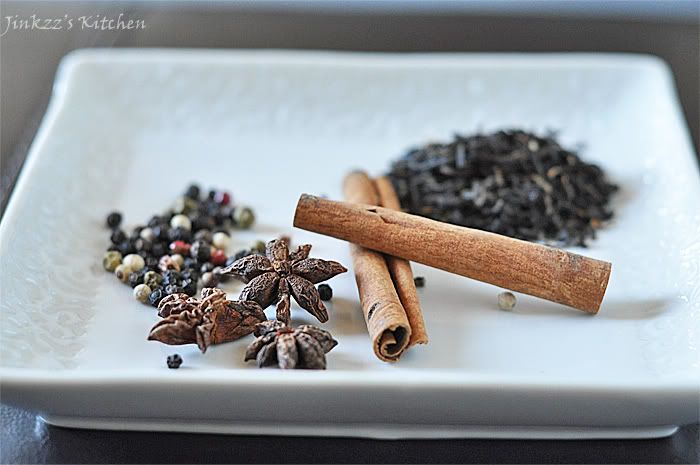
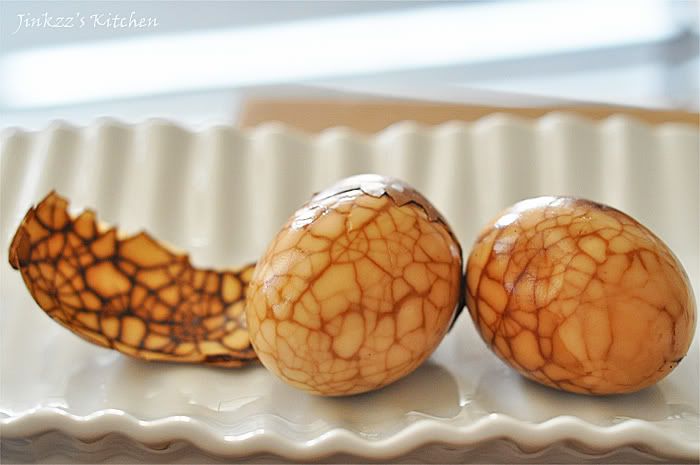
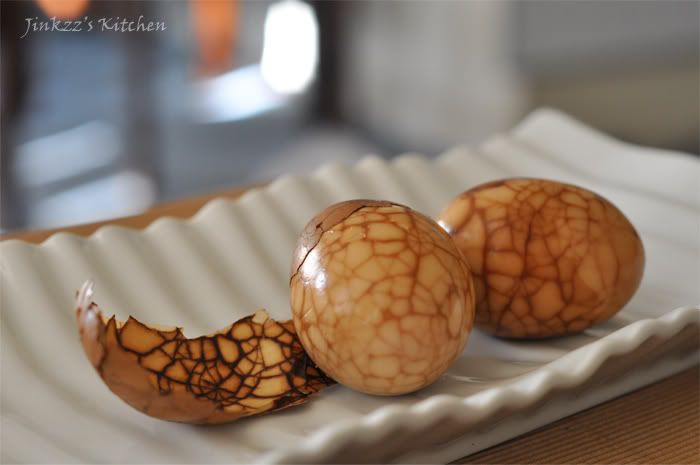
Ahhh...these babies are beautiful works of art which are easy to make...and best of all, they taste really good. These eggs are commonly sold by Chinese street vendors and are eaten as a snack. The eggs are first boiled until they reach a hard boil consistency then shells are gently cracked all over. The eggs, with the shells on, are stewed for several hours in a mixture of soy sauce, star anise, cinnamon sticks, salt, sugar, peppercorns, and black tea leaves. The cracking of the shells produces a unique marbling effect on the the eggs as well as lend a unique flavor to it.


When cracking the shells of the eggs, make sure that you are careful not to tear the shell completely otherise you will end up with an egg that is black all around instead of the beautiful marbling effect. The eggs should be eaten cold and the longer it is allowed to steep in the tea and spices mixture, the better tasting it will be.


Ingredients:

6 eggs (I used jumbo size for mine)4
2 Tbsp good quality black or pu-erh tea
2-3 star anise
2-3 cinnamon sticks
1 tsp whole peppercorns, cracked slightly
1 tsp sea salt
1 tsp sugar
1/2 cup soy sauce


1. Place eggs in a large pan and cover with water. Bring to a boil for about 2-3 minutes.
2. Remove eggs from water and let it cool. When cool enough to handle, gently crack the shells all over using the back of a spoon.
3. Place the eggs back into the boiling water and add the rest of the ingredients.
4. Allow mixture to boil and then lower heat to let the mixture simmer or about 1 hour. Add more water if needed.
5. After an hour, remove from heat and allow to cool on the counter.
6. When cool, transfer eggs and liquid to a container and place in the refrigerator to steep further for 12-24 hours or up to 2 days.
7. To serve, peel shells and serve.